thumbnail image

Adam R. Hemmings

Preserving the Past ~ Shaping the Present ~ Imagining the Future

  • Home
  • About Me
  • Explore With Me 
    • Archaeology & Research
    • Production & Curation
    • Community Building & Activism
  • Work With Me
  • …  
    • Home
    • About Me
    • Explore With Me 
      • Archaeology & Research
      • Production & Curation
      • Community Building & Activism
    • Work With Me

Adam R. Hemmings

Preserving the Past ~ Shaping the Present ~ Imagining the Future

  • Home
  • About Me
  • Explore With Me 
    • Archaeology & Research
    • Production & Curation
    • Community Building & Activism
  • Work With Me
  • …  
    • Home
    • About Me
    • Explore With Me 
      • Archaeology & Research
      • Production & Curation
      • Community Building & Activism
    • Work With Me

Adam R. Hemmings

Preserving the Past ~ Shaping the Present ~ Imagining the Future

All Categories - Adam R. Hemmings

All
Productions
Excavations
product image

Conditions of Living - Four Corners, Bethnal Green, London (2022–25)

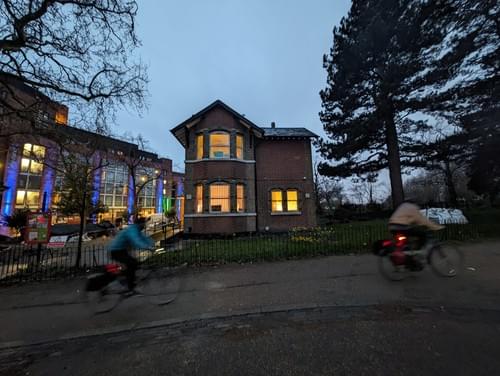
Producer & Researcher for Anthony Luvera Four Corners is a gallery dedicated to independent photography and film-making in Bethnal Green, London, founded in 1973. "Conditions of Living" examined the rise of economic segregation in recent housing developments (a phenomenon known as “poor doors”) through photography and graphic information design created in collaboration with a community forum of residents from eight housing developments across Tower Hamlets. The exhibition drew on extensive research into the communal, political, and economic evolution of market-driven affordable housing, exploring how segregation expands outward from separate entrances to access to facilities, healthcare, culture, and community space. Supported by Arts Council England, the project included a Community Forum, series of talks, a research-rich publication, and public artwork. As producer and researcher, I worked with Anthony across the full arc of the project, from co-organising the Community Forum and coordinating participant outreach, to accompanying him on shoots and supervising delivery through to exhibition opening, as well as contributing to evaluation reporting afterwards.

product image

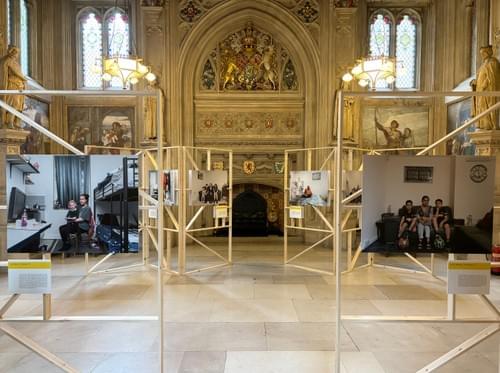
Families Living in Temporary Accommodation - House of Commons, London (2024)

Researcher & Installer for Anthony Luvera Anthony Luvera is an Australian socially-engaged artist, writer, and educator based in London. Since 2022, he was embedded within the team of Focused Care practitioners for homeless families at Shared Health Foundation, working with families in temporary accommodation across Greater Manchester to document their experiences through photography and audio recordings. Commissioned by the Households in Temporary Accommodation APPG and presented at the House of Commons in April 2024, this exhibition offered portraits and recorded conversations with families navigating temporary accommodation (109,000 households in England, including 142,490 children), alongside infographics, revealing the complexity, resilience, and quiet willpower of people in a hidden disaster. I contributed research assistance and supported the physical installation; siting custom-built display stands and frames for greatest impact on an audience of politicians and policymakers.

product image

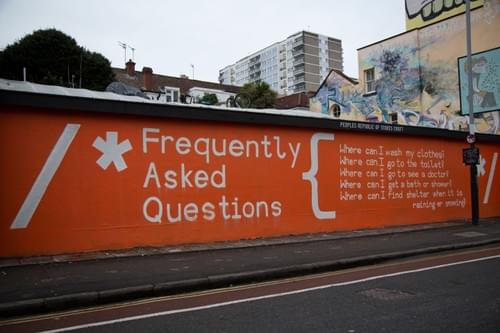
Frequently Asked Questions - People's Republic of Stokes Croft, Bristol (2019)

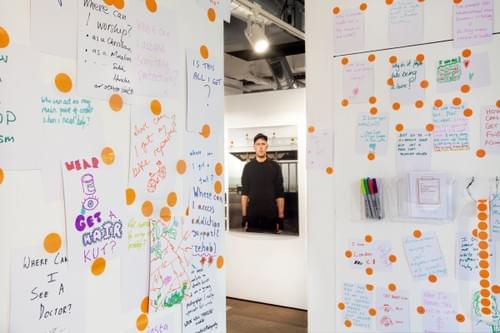
Producer for Anthony Luvera The People’s Republic of Stokes Croft is an organization and cultural space in Bristol, recognised for its activism around community identity, street art, and resistance to gentrification. “Frequently Asked Questions” is a research-driven artwork made in collaboration with Gerald Mclaverty (a participant in Luvera’s earlier “Assembly”) concentrating on the impact of homelessness at a national level. At its heart are questions arising from Gerald’s own experience: where can I find shelter? Where can I eat? Where can I sleep? Presenting replies from 110 local authorities across the UK (41 of whom did not reply at all) the work demonstrates the true scale of the crisis through one individual’s navigation of administrative and depersonalising systems of authority. Featuring photography, graphic information design, educational resources, a symposium, publication, and public artwork, the project gave voice to those most affected by institutional indifference. As producer, I contributed across both investigative and logistical dimensions, supporting development and delivery of the exhibition and its public programme.

product image

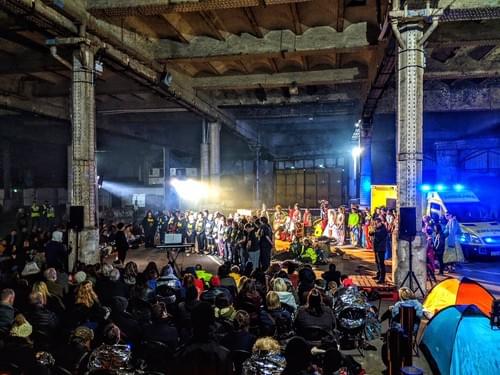
Man on Bench Fairytale - Mayfield Depot, Manchester (2018)

Producer for Museum of Homelessness - Supported by Unlimited Mayfield Depot is an iconic space in the heart of Manchester, a venue that has become one of the city's most significant sites for large-scale cultural events. “Man On Bench Fairytale” was a site-specific immersive opera by artist David Tovey, rooted in his own experience of homelessness and the stranger who saved his life on a park bench. Participants transformed discarded clothing into couture, which volunteer models then wore in a promenade performance conveying the physical and psychological traces of Tovey’s journey through homelessness and recovery. Incorporating operatic elements, high fashion, innovative immersive design, verse, and music, the work addressed universal themes of life, death, despair, and revitalisation. Presented as part of Manchester's first International Arts and Homelessness Summit and Festival, the production was commissioned by Unlimited. As producer, I oversaw all core production elements, including script supervision, action vehicles, and the delivery of full access provision (BSL interpretation, captioning, and audio description) ensuring the work reached the widest possible audience.

product image

Objectified - Manchester Art Gallery (2018)

Cultural Producer for Museum of Homelessness - Supported by the Wellcome Trust Manchester Art Gallery is one of the UK’s leading public art museums, housing a significant collection in the heart of the city. Launched on World Homeless Day, 10th October 2018, “Objectified” was an interactive exhibition exploring the hidden causes of homelessness and the neuroscience behind dehumanisation, developed in collaboration with world-class social neuroscientist Dr. Lasana Harris. Twenty objects donated by people experiencing or who had experienced homelessness were presented through verbatim object storytelling, immersive multisensory surroundings, and projected film, each revealing a fragment of a life lived and challenging stereotypes about what homelessness means. As cultural producer, I contributed across the full production process, including creating the multisensory and immersive atmosphere and bringing together the exhibition’s diverse elements into a coherent whole. Supported by the Wellcome Trust and the Patient Safety Translational Research Centre, the project extended into conferences and events through mid-2019.

product image

Passing Gloves - Rich Mix, London (2022)

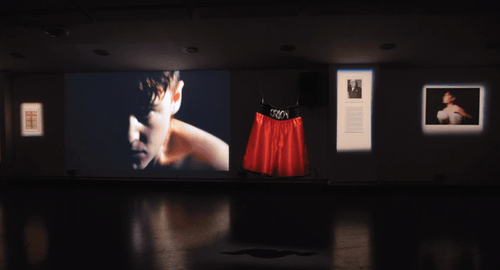
Producer-Curator with Orion Isaacs - Supported by Arts Council England “Passing Gloves” was an immersive exhibition conceived by artist Orion Isaacs, celebrating the lost and forgotten stories of Jewish boxers in the UK. Isaacs’ original photo-series and short film (produced in collaboration with Sweatmother) formed a visual dialogue with a vanished Jewish boxing archive collected for the exhibition, challenging audiences with questions of Jewish masculinity, spiritual and bodily stamina, and boxing’s extended history as a vehicle for empowering the marginalised. A soundscape by Giora, theatre lighting methods, and suspended objects combined to create an experience that was both intimate and ambitious. As co-curator and producer, I shaped the exhibition’s construction, supervised its production from development through to launch at Rich Mix, and conducted oral history fieldwork across London and Manchester, working with Jewish families connected to the world of boxing, gathering the personal pasts and family archives that form the exhibition’s documentary core, and co-leading curatorial engagement work with audiences in the form of discussion sessions.

product image

Reframing the Myth - The Guardian, Kings Place, London (2016)

Researcher & Curatorial Assistant for Graeae Theatre Company “Reframing the Myth” was a major exhibition celebrating 35 years of Graeae Theatre Company, presented at The Guardian’s exhibition space in Kings Cross. Produced in collaboration with the Central Illustration Agency, the exhibition paired 40 of CIA’s leading illustrators (including Sir Peter Blake) with 40 of Graeae’s performers, creating original works inspired by the experiences of D/deaf and Disabled performers, directors, and writers. The exhibition highlighted both the artistic achievements of Graeae’s community and the continuing challenges facing D/deaf and Disabled people under changes to the benefits system. Working as part of the Graeae team, I contributed research and curatorial support across the display, including installation and lighting, as well as producing accessible interpretation (writing captions, and recording and editing audio tour segments) to ensure the work reached the widest possible audience.

product image

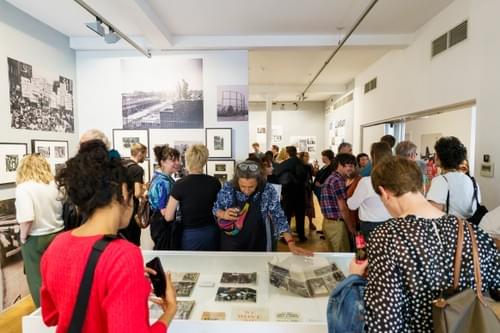
Taking Place - The Gallery at Foyles, London (2020)

Producer for Anthony Luvera - Supported by FutureCity The Gallery at Foyles is a cultural space on the fifth floor of Foyles bookshop on Charing Cross Road, curated and managed by cultural placemaking agency FutureCity. "Taking Place" brought together two bodies of work by Anthony Luvera, Assembly (2013-2014) and Frequently Asked Questions (2014-2020), to examine the scale and complexity of the homelessness crisis in Britain, uniting collaborative portraiture with a striking installation presenting responses from 110 local authorities on services available to people experiencing homelessness, 41 of whom did not answer at all. Produced in association with Museum of Homelessness and supported by Coventry University, the exhibition ran from January to February 2020, accompanied by a full day of talks on homelessness and housing justice. As producer, I contributed across many dimensions of the project: communicating with local authorities, amassing data, supporting the development of the accompanying publication, and supervising delivery of the exhibition and its public programme.

product image

How To Survive The Apocalypse - Museum of Homelessness, London (2024–2025)

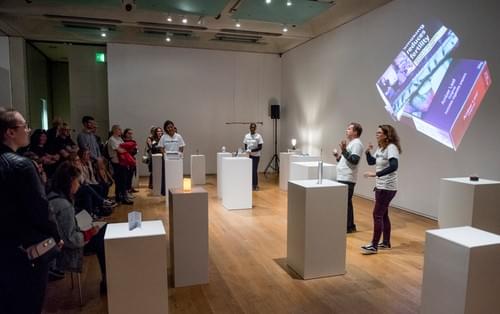
Operations & Production Manager Museum of Homelessness is a ground-breaking, community-driven social justice museum led by individuals with direct experience of homelessness, founded in 2014 by Jess and Matt Turtle. After a decade without a permanent home, the museum opened its first fixed site at Manor House Lodge, Finsbury Park, in May 2024, an opening covered by the BBC, The Economist, The Guardian, and on the cover of The Big Issue. “How To Survive The Apocalypse” was the inaugural exhibition, combining live verbatim object storytelling, immersive projection, promenade performance, and audience discussion to explore the resilience, ingenuity, and creativity of people experiencing homelessness. We inverted conventional narratives and showed that people experiencing homelessness are bearers of practical wisdom in our precarious world. As Operations & Production Manager, I played a central role in building the exhibition and the museum’s operations from inception to delivery and beyond across its launch year, overseeing production, marketing, stakeholder engagement, and day-to-day processes. Named one of the best exhibitions in London by The Guardian and London on the Inside.

product image

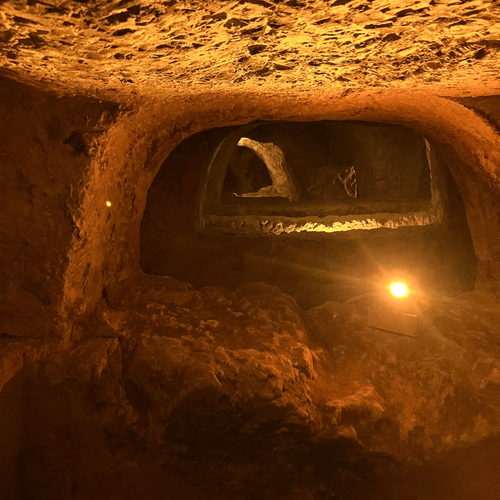
Malta – Rabat Catacombs (St Paul’s Grotto Complex, beneath the Wignacourt Museum) (2025)

The Rabat Catacombs form part of the Roman necropolis of ancient Melite, a subterranean funerary complex beneath the Wignacourt Museum, dating to the 3rd century and theorised to include Punic, Roman, and Early Christian elements. The hypogea preserve diverse tomb typologies, ritual features including an agape table, and evidence of longue durée reuse, including as World War II air raid shelters. During a research visit to this site, I identified and photographed a before only noted inscription carved into the catacomb walls, likely Phoenician/Punic in origin. My focus was on photographic documentation and preliminary linguistic analysis in the context of cross-cultural funerary practice in the central Mediterranean. A short research note presenting the translation and its contextual significance is forthcoming.

product image

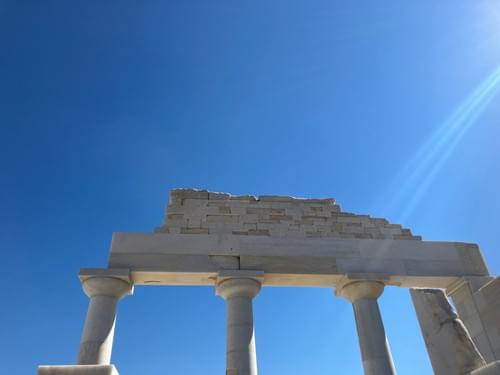
Greece – Despotiko (2024)

Despotiko is an uninhabited Cycladic island whose strategic position in the Aegean made it a significant node in ancient maritime trade. Excavations have revealed a major late Archaic sanctuary, likely dedicated to Apollo, with evidence of sustained occupation from the Archaic through Roman periods and material connections spanning the Eastern Mediterranean. During a visit to the site, I observed ongoing restoration techniques and conservation strategies. In parallel, I undertook preliminary research into Egyptian scarabs in Greek contexts, examining two examples in existing scholarship (one attributable to the Second Intermediate Period and the other bearing iconography associated with Thutmose III). This research forms the basis of a short paper currently in development, exploring Egyptian material culture and its transmission through Aegean trade networks.

product image

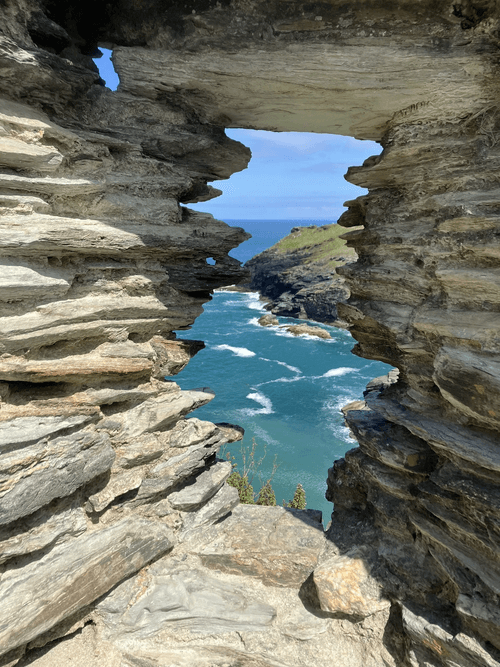
UK - Cornwall (2024)

Cornwall preserves a layered heritage landscape spanning Late Antique trade, medieval occupation, industrial archaeology, and centuries of myth-making and heritage construction. Three sites were visited as part of independent field research into how landscapes accumulate and transform meanings across time. At Tintagel Castle, I examined evidence of high-status post-Roman occupation and long-distance Mediterranean trade connections, observing ongoing conservation of 5th–6th-century remains alongside the site's complex Arthurian associations. At St Nectan's Glen and Kieve, I documented modern ritual use and examined the Victorian origins of the hermitage narrative, forming a case study in how sacred meaning is constructed and layered onto landscape. At Kennall Vale, I observed the preservation challenges facing industrial ruins within an ecologically sensitive environment. Together these sites clarify the processes by which landscapes become heritage through excavation, storytelling, conservation, and the slow amassing of human significance.

product image

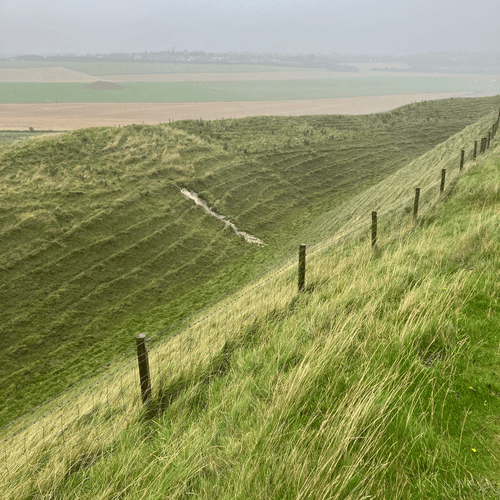
UK - Dorset (2023)

Dorset preserves a layered archaeological landscape, from the monumental Iron Age earthworks of Maiden Castle to the remains of Roman urban life at Durnovaria and the early medieval heritage scattered across its rural churches. The county offers a compressed encounter with British early history, Roman occupation, and post-Roman change. During a field visit to key sites, I walked the area of Maiden Castle, examining its complex history of occupation and defence, and visited the Roman Town House in Dorchester, where preserved mosaic floors and domestic architecture offer direct evidence of Romano-British urban life. The most striking encounter was at the remote church of St Mary, Melbury Bubb, home to a remarkable 10th-century Anglo-Saxon font carved from the inverted base of a cross. Its frieze of zoomorphic figures (including a stag, lion, dolphin, and intertwined beings) reflects a stylistic blend of Scandinavian and Northumbrian carving traditions, raising compelling questions about the persistence of pre-Christian symbolism within early Christian material culture.

product image

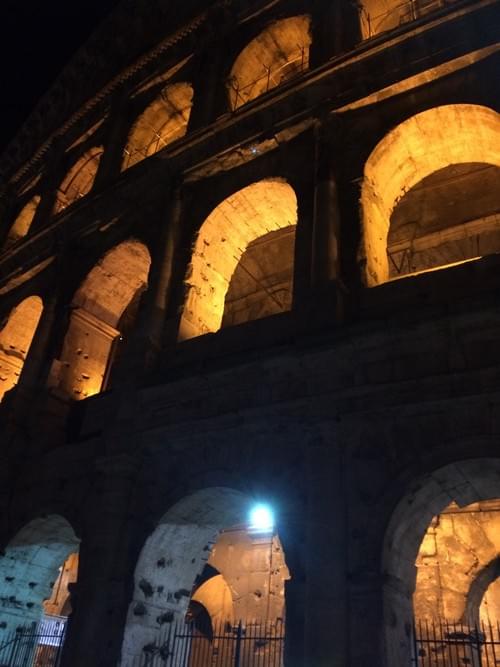
Italy - Rome (2019)

Rome’s archaeological landscape represents one of the most concentrated intersections of ancient cultures in the world, where Egyptian, Near Eastern, Greek, Etruscan, and Roman material traditions converge in its museums and monuments. For a researcher working across archaeology, ancient Near Eastern studies, and heritage, the city offers unparalleled first-hand access to primary material. At the Arch of Titus, I examined relief depictions of artefacts looted from the Second Temple, one of the most significant visual records of its obliteration. At the Vatican Museums, objects examined included the Stele of Iahmes (18th Dynasty), the Funerary Stele of Ankh-Hapy (27th Dynasty, Aramaic inscription), and Palmyrene funerary reliefs of exceptional excellence. Most striking was a terracotta sculpture depicting the Dying Adonis (c. 250–200 BCE, Tuscania), bearing a remarkable visual correspondence to Michelangelo's Pietà and suggesting iconographic continuity between ancient Near Eastern dying-god traditions and Christian representations of the dead Christ. The Ara Pacis raised further questions about monumental reconstruction in the service of modern politics.

product image

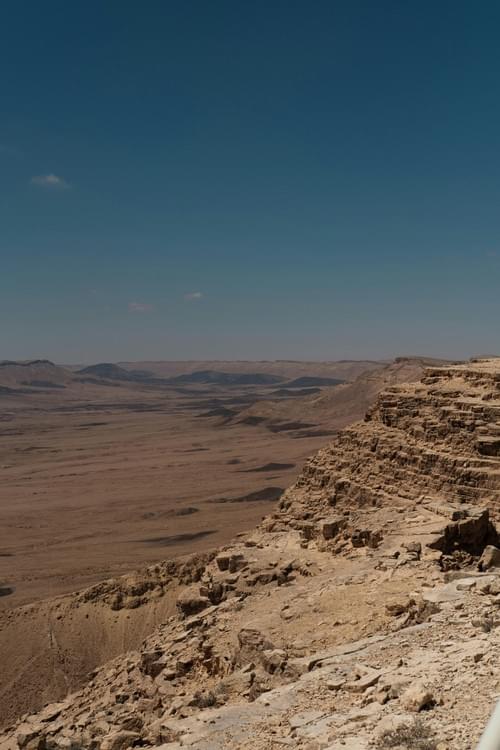
Israel – Negev Desert (2012)

The Negev Desert preserves a landscape of profound historical complexity, from ancient Nabataean trade ways and biblical pastoral traditions to the living heritage of the Bedouin communities whose presence has shaped the region across millennia. The desert environment itself embodies the intersection of material survival, oral culture, and collective memory that defines non-sedentary life in ancient and modern South-West Asia. During a visit to the area, I worked with a Bedouin community, observing and discussing their living traditions of oral storytelling, and taking part in camel husbandry, tent construction, and desert survival. These observations have informed later thinking on comparative nomadism in the ancient Near East, particularly the relationship between oral transmission, material culture, and cultural memory in pastoral groups, and point toward potential future inquiry into biblical and contemporary nomadic traditions.

product image

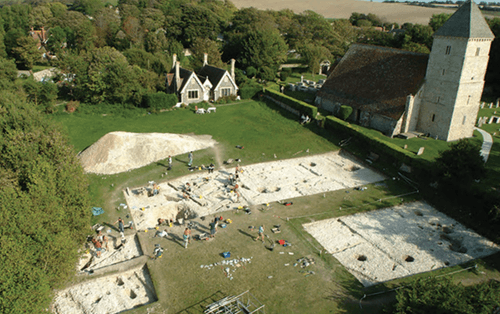
UK – Bishopstone Valley Excavation (2005, University of Kent)

Bishopstone Valley, East Sussex, preserves a significant Anglo-Saxon archaeological complex centred on the settlement and cemetery associated with St. Andrews Church. The site encompasses evidence of late Romano-British activity, a 9th–12th-century Saxon settlement, and burials of the Late Saxon period, making it an important location for understanding continuity and change in early medieval Sussex. As an excavator with the University of Kent’s Bishopstone Valley Archaeological Project under the direction of Dr. Gabor Thomas, I contributed across many aspects of the excavation over the summer of 2005. Work included geophysical survey and earthwork identification, excavation of the outer village wall, recording and planning of context excavations, human remains excavation and documentation, and the sampling and processing of artefacts and environmental remains through wet-sieving and flotation.

product image

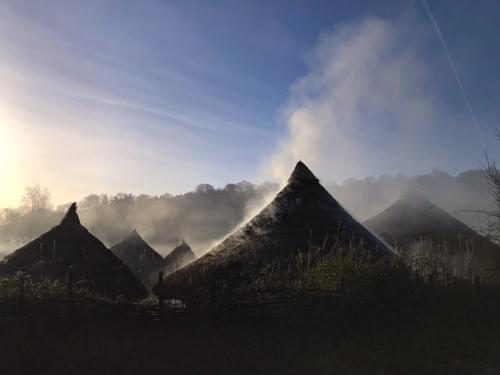
UK – Butser Ancient Farm (2004)

Butser Ancient Farm, Hampshire, is one of Britain’s foremost experimental archaeology sites, reconstructing Iron Age domestic and agricultural life through living investigations. Its hands-on approach to the ancient past makes it an ideal environment for foundational archaeological training, grounding technique in direct engagement with the material record. In 2004, I completed a Basic Archaeological Excavation and Recording Techniques certification at the site under Steven Dyer and Joyce Herve. Training encompassed the full range of core field skills: artefact identification and dating, stratigraphic excavation of layers and topographies, test trenching, site surveying, section and plan sketching, photographic documentation, finds processing, and context identification.

product image

USA – Four Corners Region (2003, American Museum of Natural History)

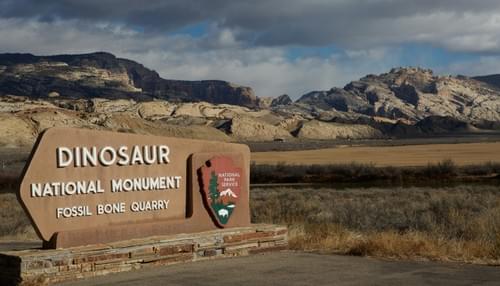
The Four Corners region of the American Southwest preserves one of the world’s richest repositories of Upper Jurassic fossil material, offering exceptional insight into ancient ecosystems predating human presence in the Americas by hundreds of millions of years. The landscape itself provides a formative encounter with deep time and the material evidence of life’s long history. As a programme participant with the American Museum of Natural History in the summer of 2003, I contributed to palaeontological excavation across the area, gaining foundational experience in excavation techniques, fossil extraction and preparation, specimen cleaning and documentation, and the preliminary interpretation of faunal assemblages. While my later work has focused on human history and cultural inheritance, this early engagement with stratigraphic excavation and material analysis provided an enduring grounding in field methods that have informed my archaeological practice ever since.

  • Adam R. Hemmings

    is an archaeologist, producer-curator, and community builder
    Come Explore With Me

Copyright © 2026 Adam R. Hemmings. All rights reserved.

    Cookie Use
    We use cookies to ensure a smooth browsing experience. By continuing we assume you accept the use of cookies.
    Learn More