
Go Back
UK - Dorset (2023)
Dorset preserves a layered archaeological landscape, from the monumental Iron Age earthworks of Maiden Castle to the remains of Roman urban life at Durnovaria and the early medieval heritage scattered across its rural churches. The county offers a compressed encounter with British early history, Roman occupation, and post-Roman change.
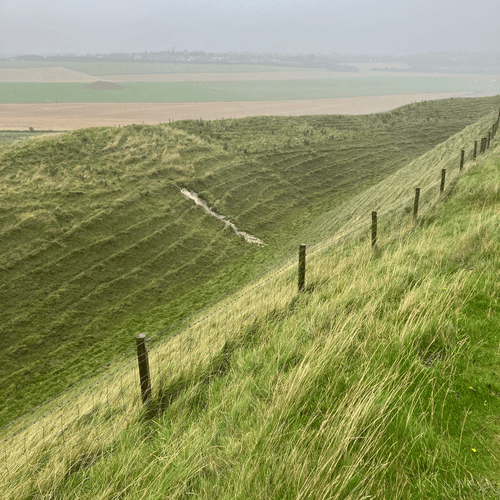
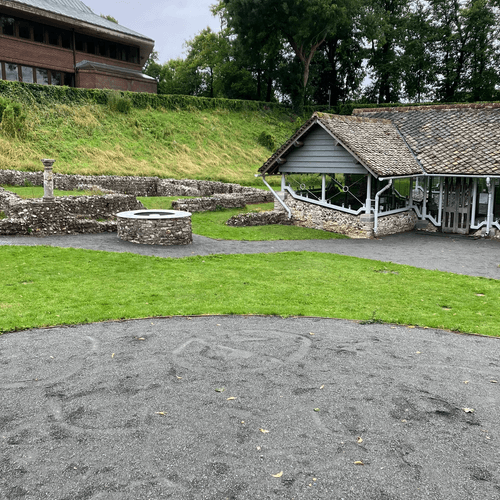
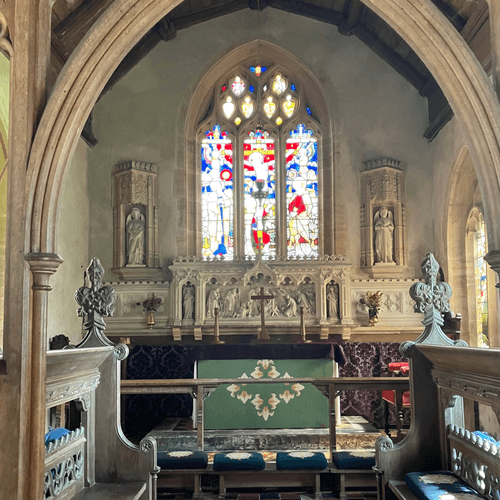
During a field visit to key sites, I walked the area of Maiden Castle, examining its complex history of occupation and defence, and visited the Roman Town House in Dorchester, where preserved mosaic floors and domestic architecture offer direct evidence of Romano-British urban life. The most striking encounter was at the remote church of St Mary, Melbury Bubb, home to a remarkable 10th-century Anglo-Saxon font carved from the inverted base of a cross. Its frieze of zoomorphic figures (including a stag, lion, dolphin, and intertwined beings) reflects a stylistic blend of Scandinavian and Northumbrian carving traditions, raising compelling questions about the persistence of pre-Christian symbolism within early Christian material culture.
During a field visit to key sites, I walked the area of Maiden Castle, examining its complex history of occupation and defence, and visited the Roman Town House in Dorchester, where preserved mosaic floors and domestic architecture offer direct evidence of Romano-British urban life. The most striking encounter was at the remote church of St Mary, Melbury Bubb, home to a remarkable 10th-century Anglo-Saxon font carved from the inverted base of a cross. Its frieze of zoomorphic figures (including a stag, lion, dolphin, and intertwined beings) reflects a stylistic blend of Scandinavian and Northumbrian carving traditions, raising compelling questions about the persistence of pre-Christian symbolism within early Christian material culture.
